Cardboard vs Alternative Materials in Sustainable Furniture Packaging
Spend enough time in furniture manufacturing and you stop noticing the packaging. It’s just there — the polystyrene corners, the plastic void fill, the stuff that gets ripped off and binned before anyone even looks at the piece inside.
Which is probably why it’s taken the industry this long to seriously reckon with what that all actually costs.
Not just in material terms, though that’s part of it. In reputation, in retail partner relationships, in the increasing number of eco-conscious consumers who absolutely do notice what their new sofa arrived wrapped in. Sustainable furniture packaging has moved from a nice-to-have to something that furniture brands are being asked to account for — in audits, in supplier questionnaires, in conversations with retailers who have their own sustainability commitments to meet.
The question most manufacturers are sitting with right now isn’t really whether to make the switch. It’s what to switch to, and whether it’ll actually hold up.
The Case Against Polystyrene, In Sustainable Packaging
Polystyrene works. That’s the annoying thing about it. As a cushioning material for bulky furniture items in transit, it does the job — it’s lightweight, it moulds well, and at volume it’s cheap. If you’re purely optimising for product protection and unit cost and nothing else, it’s hard to beat.
The problem is everything else. Polystyrene doesn’t break down naturally — not in any timeframe that matters — it can’t go into standard recycling streams, and the end customer is left standing in their hallway with a pile of it and genuinely nowhere useful to put it. Some councils have specialist drop-off points. Most people don’t use them. It ends up in general waste, which means landfill, which means it’s essentially permanent.
For furniture brands, this is now a commercial problem as much as an environmental one. Retail partners are asking questions about supply chain sustainability that weren’t being asked five years ago. The furniture industry is under real scrutiny on packaging waste specifically, and polystyrene has become one of the harder things to defend in that conversation.
Single-use plastic filler sits in the same territory. Lighter, cheaper in some configurations, and it creates the exact same disposal problem downstream — just in a different form. Handing that problem to the customer isn’t a solution, it’s a deferral.
What Corrugated Cardboard Offers Furniture Packaging
The reason corrugated cardboard has become the go-to sustainable alternative in furniture packaging isn’t sentiment — it’s that the practical case is strong and keeps getting stronger.
It’s recyclable through standard kerbside and commercial waste streams, which matters because it means the customer can actually do something useful with it without any special effort. It’s made from recycled materials — at Limehouse, a minimum of 70% recycled fibre goes into every board manufactured, and the whole range is FSC® certified. For furniture brands navigating retail partner audits or building out their sustainability documentation, that certification is a concrete thing you can point to.
There’s also a weight argument. Lighter packaging reduces shipping emissions across the supply chain — which sounds incremental until you’re running the numbers across thousands of units annually, at which point it has a real effect on both carbon footprint and distribution costs.
The bit that gives manufacturers pause — understandably — is performance. Corrugated cardboard cushions differently to polystyrene. It’s not a straight swap, and treating it like one is where the early failed transitions tended to come from. A cardboard packaging solution that’s been properly engineered for the specific piece of furniture — the weight, the vulnerable points, how it sits in the box during transit — performs well. Generic cardboard slapped around something that was previously shipped in moulded polystyrene doesn’t, and the product damage costs that follow are real.
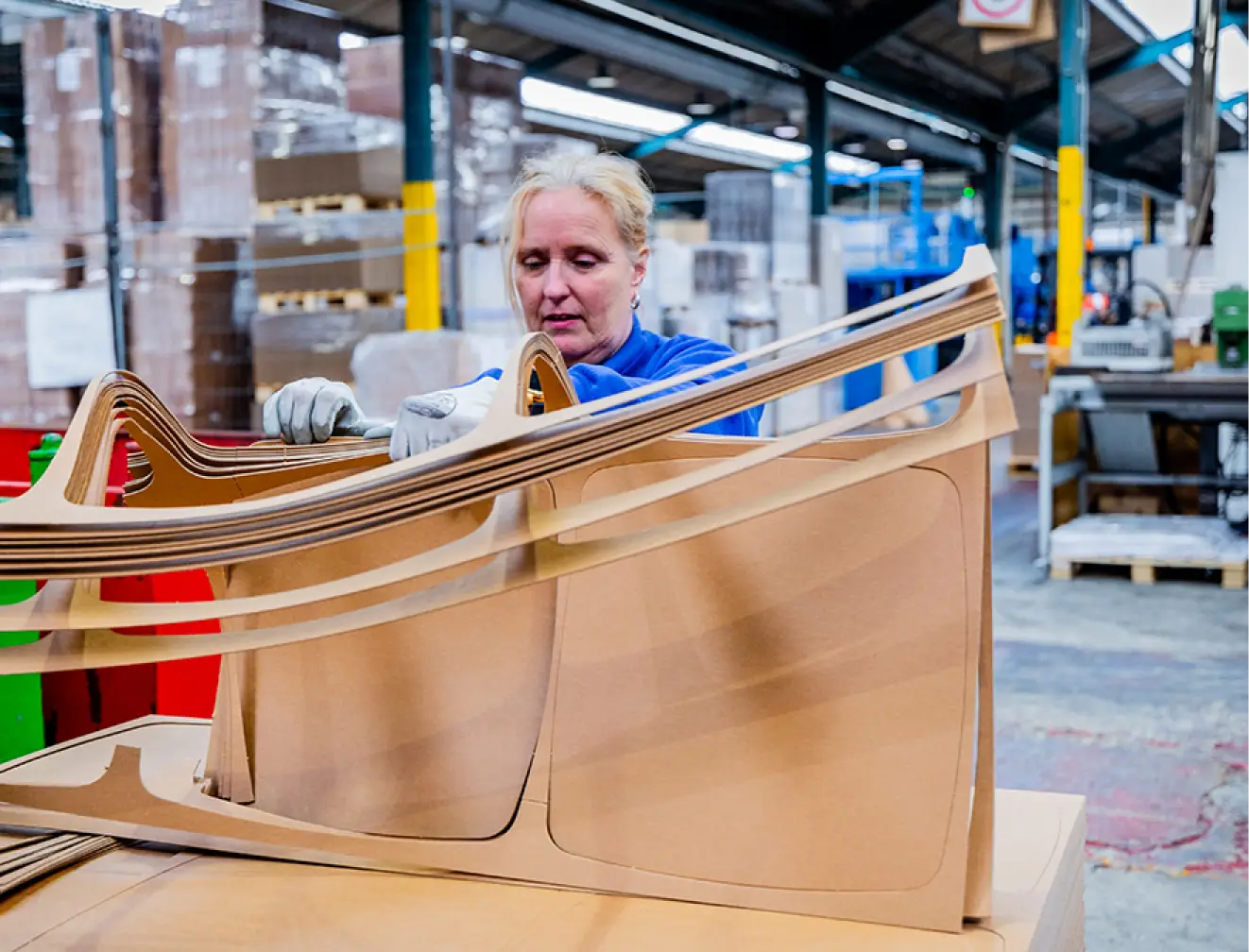
Bespoke packaging design is what bridges that gap. Die-cut components, layered corrugated sections where cushioning is needed, geometry that eliminates unnecessary filler rather than just substituting one material for another. It’s more involved than buying polystyrene corners off a shelf, which is probably why some manufacturers have been slow to make the move — but the protection performance, when the design is right, is there.
The Cost Conversation Is More Complicated Than It Looks
There’s a version of the sustainable packaging argument that positions it as purely a cost premium — you pay more because it’s the right thing to do. That framing does the actual economics a disservice.
It is sometimes true that bespoke sustainable packaging can carry higher upfront costs compared to high-volume polystyrene components. But that comparison is running against a number that doesn’t include the cost of product damage in transit, the cost of returns and replacements, or the operational cost of handling complaints. It’s also not accounting for what it costs — in the longer term, harder to quantify — when a furniture brand’s packaging lands badly with eco-conscious consumers or fails a sustainability audit that a key retail partner requires.
The scalable version of this is packaging designed from the outset to eliminate unnecessary material, right-sized to the product, recyclable by design rather than by accident. That’s where the economics start to look genuinely favourable compared to conventional alternatives, and it’s the framing that makes sustainable furniture packaging a supply chain decision rather than just an environmental one.
Where Limehouse’s Eco-Friendly Packaging Solution Fits
We’ve been making specialist cardboard components for the furniture industry for over 160 years — FSC® certified, manufactured with a minimum of 70% recycled fibre, and with the bespoke design and conversion capability to engineer packaging solutions that are built around specific products rather than adapted from something generic.
Next-day delivery is available on stocked lines across the UK, and if you’re working through a switch from polystyrene or plastic-based materials and need to think through the specification, that’s exactly the kind of conversation our team is set up for.
Get in touch at sales@limehouse-board.co.uk or call 01376 519519 — sustainable furniture packaging that actually holds up in transit is worth getting right from the start.