
Food Grade Packaging: What Food Businesses Should Look For
Food grade packaging tends to get treated as a simple label, but for food businesses, it carries much wider implications than that. It affects food safety, compliance, product integrity, sustainability and, increasingly, how a brand is perceived. Whether the packaging is used for takeaway food, dry foods, fresh produce or broader food service applications, the question is not simply whether packaging can hold food but whether the packaging is designed to hold food safely under the conditions in which it will actually be used.
That distinction matters because packaging intended for direct contact with food has to do more than perform structurally. It may need to resist grease, tolerate heat, preserve freshness or maintain integrity when exposed to moisture depending on the product and application. For food businesses, that is why choosing the right food packaging material is rarely just a procurement decision. It is often part of product quality control.
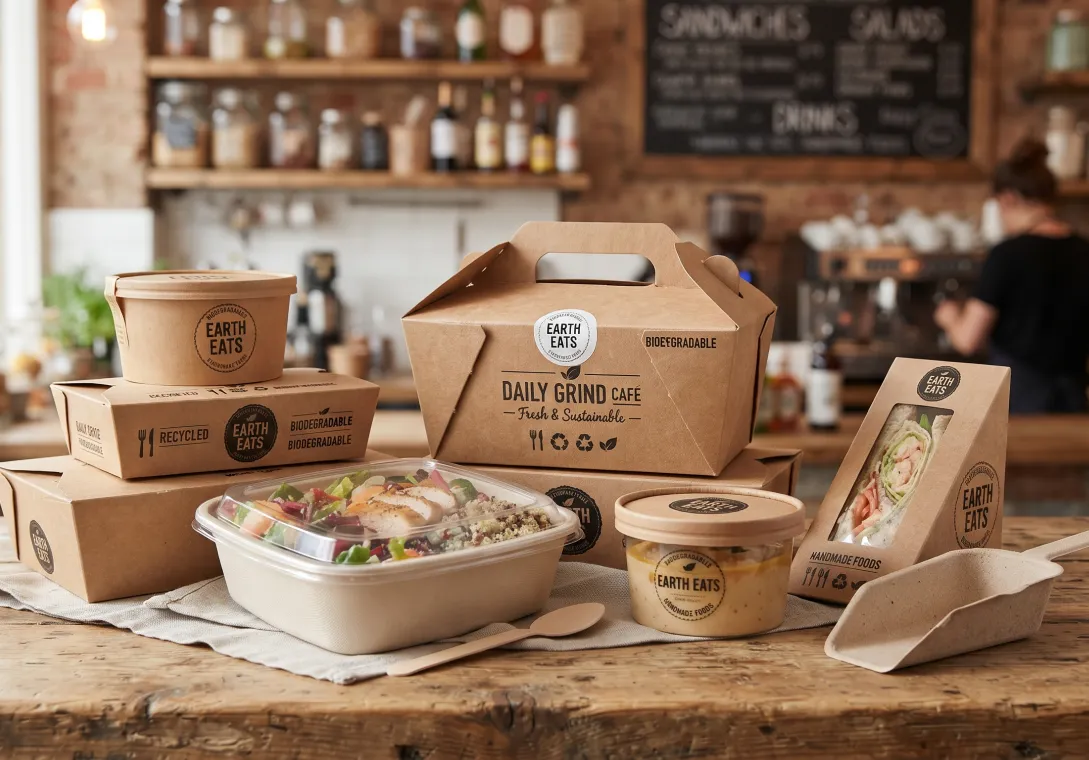
What Does Food Grade Packaging Mean?
In practical terms, food grade packaging refers to packaging materials suitable for direct contact with food without transferring harmful substances, compromising product safety or affecting food quality. That can include a wide range of packaging products from food boxes and takeaway packaging to trays, paper bags, compostable food containers and specialist packaging for food and beverages.
Materials commonly used in food-safe packaging include:
- Kraft paper and kraft paperboard
- Bagasse made from sugarcane fibre
- Food-grade paper and pulp formats
- Compostable or biodegradable food containers
- Aluminium foil in some food service applications
- Recyclable paper-based takeaway boxes
The right material depends on the product. Packaging for dry foods may need something quite different from packaging designed for hot takeaway food or grease-heavy food products.
Why Food-Safe Packaging Matters
Food-safe packaging is often discussed in compliance terms, and rightly so, but it also has a practical performance role. Packaging that is poorly specified for food contact can affect freshness, lead to leakage, struggle with heat resistance or create issues around food handling.
For food businesses, those risks can affect more than product performance. They can affect reputation.
Areas food-safe packaging often needs to support include:
- Safe direct contact with food
- Protection against contamination
- Product freshness and integrity
- Heat resistance where required
- Durability during transport or takeaway handling
- Packaging suited to the operational demands of food service
For takeaway businesses especially, this can be critical. Packaging often has to protect food quality while also functioning during delivery, handling and customer use.
Food Grade Packaging and Sustainability
Sustainability has shifted expectations in the food packaging sector quite significantly. Many businesses are looking for eco-friendly food packaging that supports food safety while reducing environmental impact, which has increased demand for sustainable packaging made from renewable or recyclable materials.
That has helped drive growth in formats such as:
- Compostable takeaway food packaging
- Recyclable kraft food packaging
- Bagasse trays and food containers
- Alternative to plastic bags in food service
- Environmentally friendly food packaging supplies
That said, sustainability claims should always be assessed carefully. Terms such as biodegradable, compostable and recyclable can mean different things depending on the material and disposal route. For many food businesses, the better question is not whether packaging sounds eco-friendly, but whether it works in practice within their supply chain and waste systems.
Compliance and Standards Matter
This is where food grade packaging moves beyond material choice alone.
Businesses sourcing food packaging products often need confidence around standards, traceability and supplier controls, particularly where packaging is used in regulated food environments. This is one reason standards such as BRCGS often come into conversations around food packaging suppliers.
For many buyers, questions worth asking include:
- Is the packaging suitable for direct contact with food?
- Does the supplier support recognised food safety standards?
- Is the packaging designed for the intended food application?
- Can the packaging maintain integrity under use conditions?
- Are sustainability claims properly supported?
These are not just technical questions. They are often commercial risk questions too.
Choosing the Right Food Packaging Solution
The right food packaging solution depends on what the packaging needs to do. That may sound obvious, but it is where many businesses start with the packaging format rather than the requirement.
A café may need paper bags and takeaway boxes prioritising cost and convenience.
A takeaway brand may need custom branded food boxes that balance food safety, durability and brand presentation.
A food manufacturer may need packaging solutions built around product protection, compliance and shelf-life performance.
Different needs lead to different packaging decisions.
What Food Businesses Should Prioritise
When reviewing food grade packaging, it often helps to focus on a few core priorities:
- Food safety suitability
- Packaging performance in use
- Sustainability requirements
- Supplier credibility
- Packaging that supports the brand as well as the product
Businesses that approach packaging through those lenses tend to make stronger long-term decisions than those choosing on unit cost alone.
Because in practice, good food grade packaging is rarely just about containing food safely. It is about protecting the product, supporting operations, meeting expectations around sustainability and helping food businesses deliver a better result from the packaging they put in customers’ hands.